How to switch your phone to 'Do Not Disturb' when driving
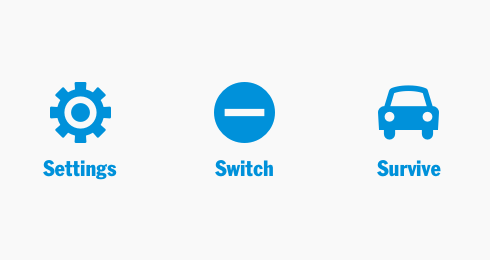
Three simple steps
- Click on settings.
- Scroll down to 'Do Not Disturb' and switch it on.
- Get to where you’re going safely.

Learn more with Moana Hope
Turn your phone on 'Do Not Disturb' when driving and turn off the temptation.
Activate 'Do Not Disturb' when driving so when people try and reach you, you can let them know you’re driving. Then get back to them as soon as you arrive safely. Personalise your do not disturb message and set it up so that calls can still come through from favourites, in case there’s an emergency.

Apple devices
The iPhone 'Do Not Disturb' feature has a range of unique capabilities. It can be activated when your iPhone senses driving motion, through in-car Bluetooth, or Siri. You can even personalise your 'Do not Disturb' message and set it up so that calls can still come through from favourites, in case there’s an emergency.
Android devices
Android phones allow users to turn on 'Do Not Disturb' on via your phone’s notification shade. You can also use the Google Play store to download a third-party app. You can even set your phone up so that calls can still come through from favourites, in case there’s an emergency.

- Drivers are 10 times more at risk of crashing if they are texting, browsing or emailing on their mobile phone
- 1/3 of drivers admit to using their phone illegally while driving
- 1/3 of pedestrians admit to looking at their phone while crossing the road1
- Distractions include more than just mobile phones, GPS devices, passengers or eating can also stop you from focusing on the road
- Taking your eyes off the road for two seconds or more doubles your crash risk. At 50kmh you will travel 28m in 2 seconds, that’s about the length of a cricket pitch
- The penalty for using your mobile device while driving is a $545 fine and 4 demerit points.
Why distractions are dangerous
Driving distracted can:
- Reduce your reaction time.
- Make it hard to maintain a consistent speed leading to slowing down or speeding up at inappropriate times.
- Lead to you drifting from your lane or onto the shoulder of the road.
- Mean you miss traffic light changes, either sitting at lights once they are green or driving through as they change to red.
- Cause you to miss seeing pedestrians, people on bicycles or those on motorcycles.
- Result in you not seeing traffic slowing in front of you which increases the risk of nose to tail crashes.
1http://www.tac.vic.gov.au/road-safety/statistics/about-tac-surveys/road-safety-and-marketing-surveys
How to switch your phone to 'Do Not Disturb' when driving
Three simple steps
- Click on settings.
- Scroll down to 'Do Not Disturb' and switch it on.
- Get to where you’re going safely.
Learn more with Moana Hope
Turn your phone on 'Do Not Disturb' when driving and turn off the temptation.
Activate 'Do Not Disturb' when driving so when people try and reach you, you can let them know you’re driving. Then get back to them as soon as you arrive safely. Personalise your do not disturb message and set it up so that calls can still come through from favourites, in case there’s an emergency.
Apple devices
The iPhone 'Do Not Disturb' feature has a range of unique capabilities. It can be activated when your iPhone senses driving motion, through in-car Bluetooth, or Siri. You can even personalise your 'Do not Disturb' message and set it up so that calls can still come through from favourites, in case there’s an emergency.
Android devices
Android phones allow users to turn on 'Do Not Disturb' on via your phone’s notification shade. You can also use the Google Play store to download a third-party app. You can even set your phone up so that calls can still come through from favourites, in case there’s an emergency.
- Drivers are 10 times more at risk of crashing if they are texting, browsing or emailing on their mobile phone
- 1/3 of drivers admit to using their phone illegally while driving
- 1/3 of pedestrians admit to looking at their phone while crossing the road1
- Distractions include more than just mobile phones, GPS devices, passengers or eating can also stop you from focusing on the road
- Taking your eyes off the road for two seconds or more doubles your crash risk. At 50kmh you will travel 28m in 2 seconds, that’s about the length of a cricket pitch
- The penalty for using your mobile device while driving is a $545 fine and 4 demerit points.
Why distractions are dangerous
Driving distracted can:
- Reduce your reaction time.
- Make it hard to maintain a consistent speed leading to slowing down or speeding up at inappropriate times.
- Lead to you drifting from your lane or onto the shoulder of the road.
- Mean you miss traffic light changes, either sitting at lights once they are green or driving through as they change to red.
- Cause you to miss seeing pedestrians, people on bicycles or those on motorcycles.
- Result in you not seeing traffic slowing in front of you which increases the risk of nose to tail crashes.
1http://www.tac.vic.gov.au/road-safety/statistics/about-tac-surveys/road-safety-and-marketing-surveys